Homeopathic Remedies for Headaches

Safe Self-Help and When to Seek Support

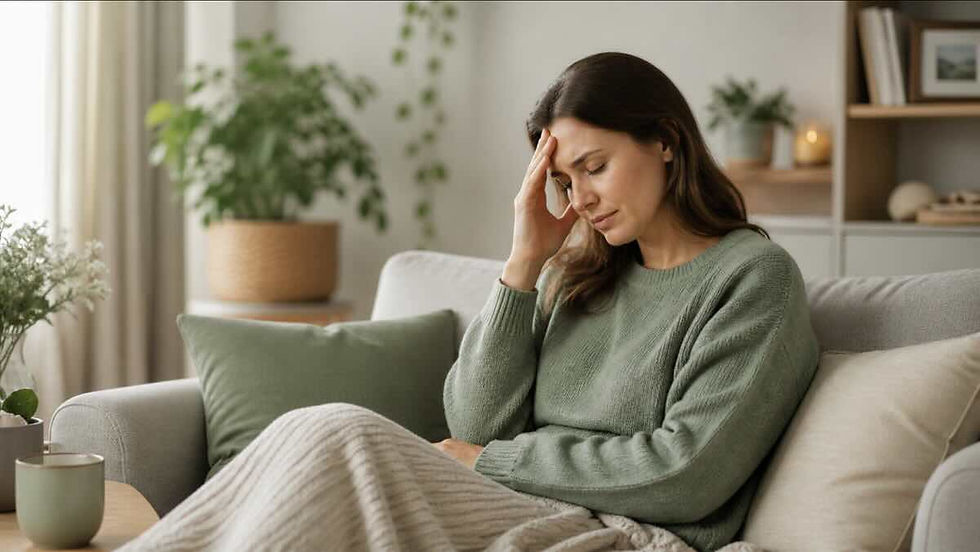
*Few things bring ordinary life to a standstill quite the way a headache can.* There is a particular quality to a bad headache — the way it narrows your world down to the pain itself, making it hard to concentrate, to be around people, or to get through even the most routine part of your day. Whether yours arrive as a dull pressure behind the eyes, a throbbing pulse at the temples, or a tight band around the whole head, the impact is real and often cumulative. Headaches vary considerably from person to person, and even within the same person over time. For some the pattern is tied to stress, poor sleep, or a missed meal. For others it is hormonal, postural, or connected to digestive function. Occasionally the trigger is obvious; more often it is a combination of things that build up together. Homeopathy approaches headaches by looking at the full character of the pain — its location, its quality, what sets it off, what makes it better or worse, and what else is going on at the same time. That individual picture is what guides remedy selection. Several homeopathic remedies for headaches are well established and widely available for self-help use, and three of the most commonly indicated ones are described below.
Important note
This article is for general educational purposes only and is not a substitute for medical diagnosis or treatment. Please seek medical advice if your symptoms are severe, persistent, worsening, unusual, unexplained, or accompanied by symptoms such as chest pain, fainting, abnormal bleeding, unexplained weight loss, fever, severe palpitations, or marked shortness of breath.
If you are taking prescribed medication, have an existing medical condition, or are unsure whether your symptoms are hormonal, menstrual, or related to another cause, it is sensible to check with a qualified healthcare professional.
When to seek medical advice
A headache is often straightforward and self-limiting, but certain features should always prompt urgent medical attention. Please do not use self-help remedies in place of proper assessment if any of the following apply.
Seek medical advice if:
Your headache comes on suddenly and is the worst you have ever experienced
Your headache is accompanied by fever, stiff neck, or a rash
You have a headache following a head injury, fall, or accident
The headache is accompanied by visual disturbance, weakness, confusion, or difficulty speaking
You are waking from sleep with headache pain on a regular basis
A new pattern of headaches develops without a clear cause, especially over the age of 50
Your headache is getting progressively worse over days or weeks rather than fluctuating
You experience headaches with significant nausea or vomiting that are new or increasing in severity
If in any doubt, please see your GP or seek urgent care before using self-help approaches.
Commonly used homeopathic remedies for headaches
Choosing a homeopathic remedy for a headache means paying close attention to the full symptom picture — not just the location of the pain, but its quality and intensity, how it came on, what makes it better or worse, and what you feel like as a person when you have it. Two people can both have a headache behind the eyes, and yet need completely different remedies based on everything else that surrounds it. This is what makes homeopathic remedies for headaches genuinely useful when chosen carefully — they target the individual pattern, not the symptom label. The three remedies below are among the most frequently indicated and are all available in high street health shops such as Boots or Holland & Barrett.
Belladonna
Belladonna is one of the most frequently called-for remedies in acute headaches with a sudden, intense onset. The pain arrives quickly and is typically throbbing, pounding, or bursting in character — often located in the forehead, temples, or the back of the head. The face may feel flushed and hot, and there is usually a strong sensitivity to light, noise, and jarring movement. Even stepping too heavily on the floor can make the pain worse. The person needing Belladonna is often restless and agitated despite wanting to be still, and the headache may come on in waves. There can be a feeling of fullness or pressure inside the skull. Lying down in a quiet, darkened room tends to help, as does firm pressure or wrapping the head. Belladonna is worth considering when a headache strikes suddenly and intensely, with that characteristic throbbing quality, heat, and sensitivity to any external stimulation. It suits acute episodes more than chronic patterns.
Bryonia
Bryonia suits headaches that build more gradually than Belladonna — the pain is often described as splitting, pressing, or bursting, and it is made dramatically worse by any movement at all. Even turning the eyes, bending forward, or taking a deep breath can intensify the pain. The person wants to stay completely still and be left alone. There is often marked irritability alongside the headache, and a strong desire to be quiet and undisturbed. Thirst for large amounts of cold water is a characteristic feature. The pain is frequently located at the forehead, temples, or back of the head, and may extend into the face or neck. Firm pressure applied to the painful area often brings some relief, and lying still in a cool, quiet room is usually the only comfortable option. Bryonia is the remedy to consider when the defining feature of the headache is extreme aggravation from movement — when even the slightest motion makes the pain significantly worse and the person craves absolute stillness and solitude.
Nux Vomica
Nux Vomica is particularly well suited to headaches that arise from tension, overwork, overindulgence, or irregular living. It is often the first remedy to think of for the classic morning headache — dull, heavy, or pressing, felt especially at the forehead or back of the head, and worse on waking or after rising. Nausea may be present alongside. The person needing Nux Vomica is typically driven and reactive, with a gut that bears the brunt of stress. Headaches may follow a late night, too much alcohol, rich food, too much coffee, or a sustained period of mental pressure. There is often irritability, heightened sensitivity to light, noise, and smell, and a sense of the whole system being wound too tight. Constipation frequently accompanies this headache picture. Nux Vomica is worth considering when the headache seems rooted in excess or tension — when the trigger is recognisable as overindulgence or overwork, when it is at its worst on waking, and when irritability and digestive heaviness are part of the picture.
How to use homeopathic remedies sensibly
Choose your remedy based on the full character of the headache — type of pain, location, triggers, and what makes it better or worse — not just the fact of having a headache
Use 30c potency as a starting point, taking one dose at the onset and repeating every 30 to 60 minutes if needed in an acute episode
If the headache is improving, reduce the frequency of doses rather than continuing to take them at the same rate
Stop when there is clear improvement — do not continue dosing once the remedy is clearly working
If there is no response after two or three doses, the remedy is likely not the right match and continuing is unlikely to help
Rest in a darkened, quiet space where possible — remedies work best when the body has room to respond
If you use prescribed pain relief regularly for headaches, speak to your GP before changing your approach, as overuse of some analgesics can contribute to medication-overuse headache
Keep a brief note of what triggered the headache and what helped, as this will make remedy selection easier next time
If headaches are frequent or becoming a regular pattern, individual support will be more appropriate than episode-by-episode self-help
Related Information
Headaches often connect to other areas of health — stress and tension are among the most common drivers, hormonal changes are a significant factor for many women, and digestive irregularity or fatigue can both lower the threshold at which headaches appear. My page on Homeopathy for Headaches gives a fuller picture of the range of headache types I work with — including tension headaches, migraines, hormonal headaches, and cluster patterns — and how I approach these in practice.
Individual Support
Headaches that return regularly, follow a complex pattern, or have defied straightforward self-help often carry a deeper layer that is worth exploring properly. The triggers and maintaining causes are not always obvious, and the most effective remedy picture may involve factors that are easy to overlook in a self-prescribing setting. In a consultation, I would explore:
When your headaches started and whether there was an identifiable trigger or life change at that time
The character, location, and timing of the pain — including whether it is one-sided, what time of day it tends to occur, and how long episodes typically last
What reliably makes the headaches better or worse — light, movement, pressure, rest, warmth, cold, food, or time of day
Whether there is a clear pattern in relation to hormones, menstrual cycle, stress, sleep, or digestive function
Any accompanying symptoms such as nausea, visual disturbance, neck tension, or sensitivity to smell
How frequently you are using pain relief and whether it is providing the relief it once did
How headaches are affecting your ability to work, concentrate, socialise, and function day to day
A consultation allows the full pattern to be explored properly, rather than focusing only on one symptom. You are welcome to contact me to ask a question or enquire about an online consultation.