Homeopathy and Stress: How a Homeopath Sees the Whole Person
Updated: Jun 20

Stress is one of the most common reasons people start looking for a gentler, more individual approach to their health. This post explains how a homeopath thinks about stress — not as a single problem to be removed, but as something woven through the whole person. It is an explanation of an approach, written so the homeopathic way of looking makes sense.
To be clear from the outset: this is educational. It is not medical advice, and it makes no claim that homeopathy treats, cures or relieves stress or any condition. The subject here is how a homeopath looks, not a promise about outcomes.
Stress is never just one thing
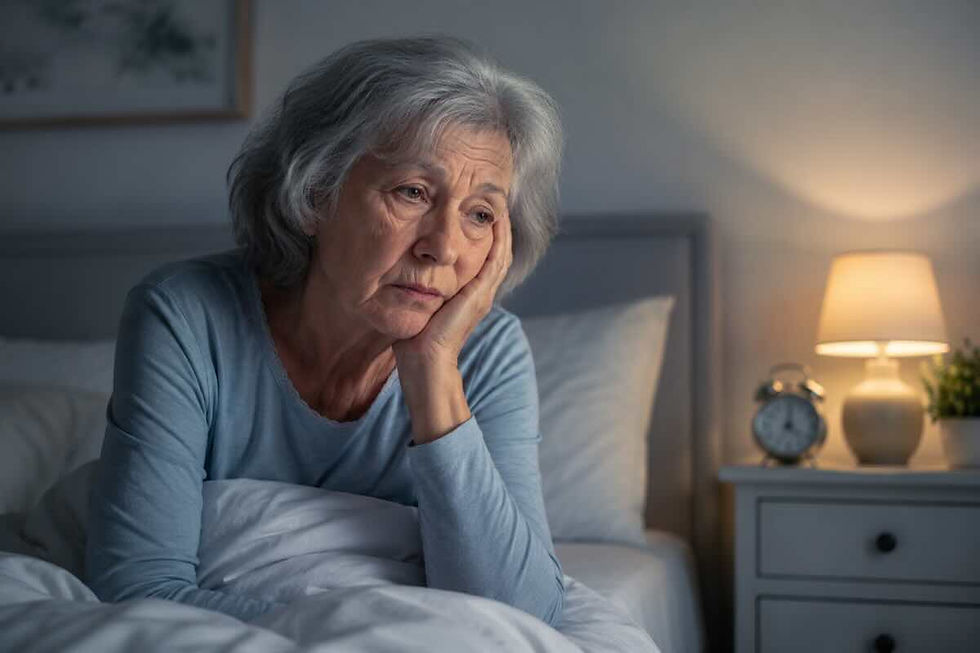
Ask ten people what stress feels like and you will get ten different answers. For one it is a racing mind and broken sleep; for another it is irritability and a short fuse; for a third it is exhaustion, low mood, or a stomach that knots at the worst moments. Stress rarely stays in one place — it threads through sleep, digestion, energy, temper and outlook all at once.
That is precisely the kind of interconnected, whole-person picture that homeopathy is built to look at.
Homeopathy and stress: why the whole person matters
When homeopathy and stress are talked about together, it is easy to assume the goal is "a remedy for stress." But that is not how a homeopath works. There is no single remedy that matches the word "stress," because stress looks different in every person.
Instead, a homeopath is interested in how this particular person experiences pressure: what tips them over, how it shows up in body and mind, what they reach for, and what steadies them. Two people under identical pressure might be understood completely differently — one wound-up and driven, another tearful and seeking comfort, another withdrawn and quiet. To a homeopath, those are different whole-person pictures.
The homeopathic question is never simply "how do I get rid of the stress?" It is "how is this whole person responding to their life right now?"
What a homeopath notices
In building that picture, a homeopath pays attention to things a brief appointment rarely has time for:
How the pressure actually shows up — in sleep, energy, mood, digestion, and the body.
What makes it better or worse, including routine, rest, company and solitude.
The emotional texture of it — anxious, irritable, flat, overwhelmed, or numb.
How long it has been building, and what was happening when it began.
It is the whole pattern, not the single word, that a homeopath works with.
Not a treatment for a label
It is worth being plain: looking at the whole person is a way of understanding, not a claim to fix a diagnosis. A responsible homeopath works alongside your doctor, recognises the limits of their role, and will encourage you to seek appropriate medical care when it is needed. Homeopathy and good medical sense are not in competition.
What draws many people to this approach is simply the experience of being met as a whole person — of being asked, in detail and without hurry, how things actually are across the whole of their life.
If being seen this way appeals to you, an individual consultation is the place it happens.
Individual Support
When stress has woven itself through your sleep, energy and mood, a single remedy chosen from a shelf rarely captures the whole of it. An individual consultation looks at the whole pattern.
In a first consultation, I would explore:
When things began and whether there was a clear trigger
Exactly how you experience them, in your own words
What makes them better or worse — including stress, routine, and daily life
Your wider health picture — sleep, energy, appetite, and how long things have been going on
Anything you are already doing or taking, and any diagnoses you have
How it all fits together as one whole-person pattern
A consultation allows the full pattern to be explored properly, rather than focusing on one piece in isolation. You are welcome to book a free intro call to ask a question or to see whether working together feels right — in person in Malmö or online.
This article is educational and describes how a homeopath approaches the whole person. It is not medical advice and makes no claim to diagnose, treat, cure, or relieve stress or any condition. Homeopathy is intended to complement, not replace, conventional medical care. If you are struggling, please speak with your GP or a qualified professional.
Written by Sharon McAllister — UK-qualified homeopath, former Registered Nurse of 35 years, and former Vice Principal of a homeopathy college.